Antique Marks: How to Date a Piece by Nippon, Occupied Japan, Patent Numbers, Labels or ZIP Code
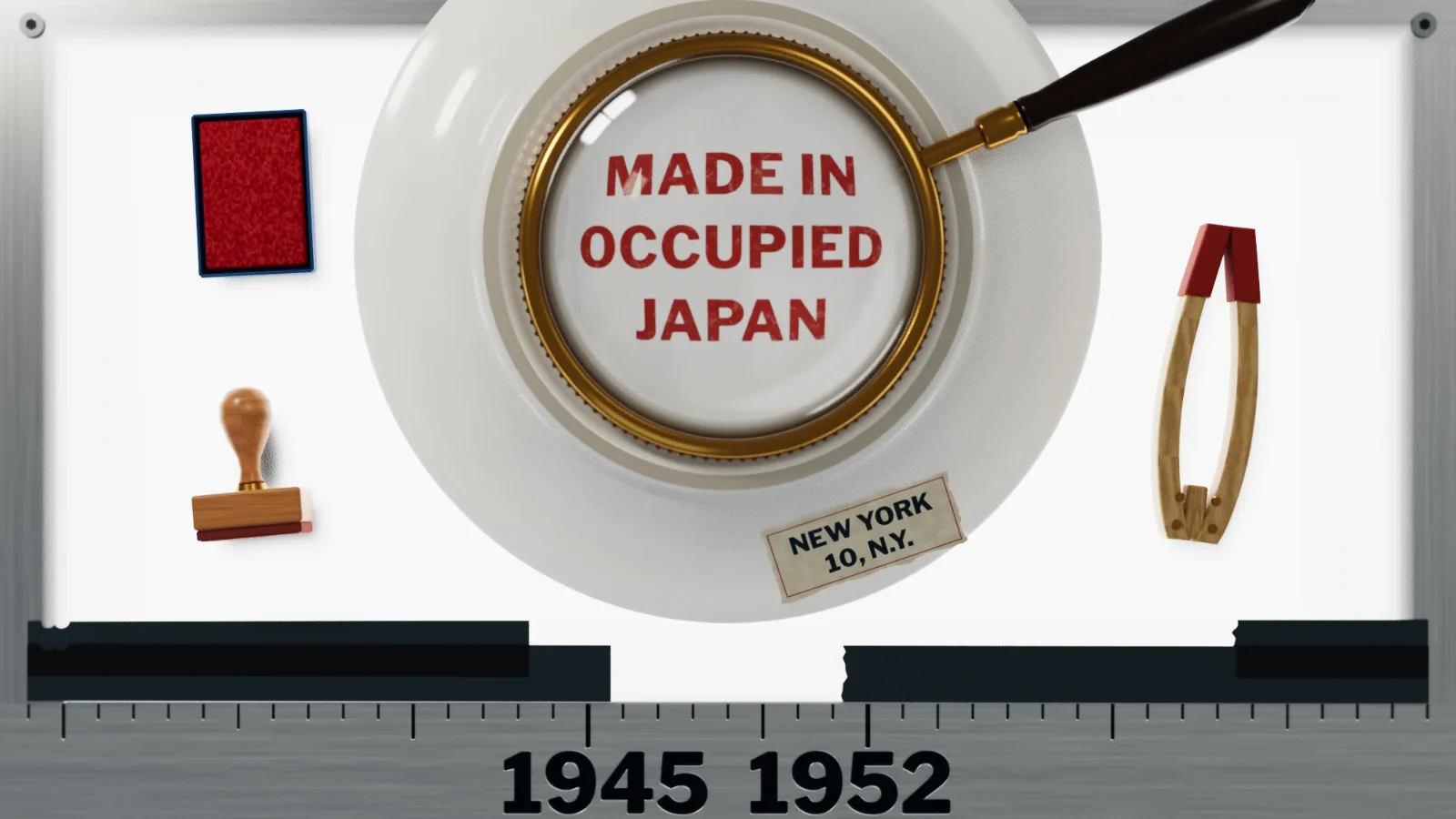
An antique mark rules years out. Lay yours on a light table, keep the years they share, and see which dates are firm and which are only approximate.
Antique marks date a thing by what had to exist before the mark could. A ZIP Code means July 1963 or later, “Made in Occupied Japan” means 1945 to 1952, and two marks together leave only the years they share.
Lay yours on the light table. It holds 60 marks, old and newer, each with its source, read November 24, 2026. It runs in your browser, sends nothing, and works in a basement with no signal while the tab stays open. Where it says “about,” an earlier piece is possible.
Only the years your marks share stay lit
Where is the mark?
Under a plate, cup or figurine
Stamped or molded: metal, plastic, glass, a nameplate
On a label, box or instruction sheet
Sewn into cloth
On a bottle
On the table: American Optical microscope
Seen as late as 1974, on a lace maker’s label in the Smithsonian.
1949 to 1963. It opens with the patent number and closes with the postal zone number: about 14 years.
Too new to be an antique: the earliest it turns 100 is 2049.
Why these years
Practice on five museum things
Farberware percolator, Smithsonian, 1989.3116.04. Under the base: PAT. NO. 2,817,743; FARBERWARE ®; BRONX, N.Y. 10461.
Patent 1957, ® 1947, ZIP July 1963: the latest start wins, so July 1963 or later. The museum says about 1966.
Tin horse and rider, Victoria and Albert Museum, B.176:1-1994. On the horse, the rider and the box lid: MADE IN OCCUPIED JAPAN.
One mark with both ends: 1945 to April 1952, most likely from March 1947. The museum says 1945 to 1955; the mark is the narrower of the two.
American Optical microscope, Smithsonian, 1980.0468.01. Under the base: BUFFALO 15, N.Y.; U.S. PAT. 2,474,644; DES 148,123.
The address closes at 1963 and the patent opens at 1949: 1949 to 1963. The serial number says about 1955.
Opera harmonica and its box, Smithsonian, 1988.0783.245. On the harmonica; on the box: MADE IN WEST GERMANY; MADE IN GERMANY-US-ZONE.
West Germany opens on the day the zones close, September 21, 1949. They meet on that one day: probably a new harmonica in an old box. The museum says 1948 to 1952.
American Beauty iron in a crate, Smithsonian, 1991.0433.01. On the iron’s plate; on the crate’s label: PAT. NO’S 1934131, 1985100, 1986346; DETROIT 2, MICH., U.S.A.
Together they say 1943 to 1963, and the museum says about 1936: a miss. The museum calls the crate original, and notes that it is marked for direct current while the iron takes only alternating. Its label’s address is from 1943 or later. Read apart, the iron says 1935 or later and the label 1943 to 1963. That the label is the newer thing is our reading.
Sources, read November 24, 2026
State Department, Maryland Archaeological Conservation Laboratory, Nagoya University, UK National Archives, USPTO, USPS, FCC, FTC and Society for Historical Archaeology; each strip’s own is under “Why these years”.
The method
Ask two things of every word on the base: what had to exist first, and when did it stop? The first answer is a floor, and it mostly holds. The second is a ceiling, and it leaks, because labels and stamps get used up after they stop being true.
So the latest start wins. A Farberware percolator in the Smithsonian carries a patent number issued on December 24, 1957. The same base has a ZIP Code, 10461, and those five digits move the earliest year up to 1963. The museum’s date is about 1966.
Some floors are absolute: no West Germany before September 21, 1949, no QR code before 1994. Others are words a law prescribed, which somebody may have used a little early, like the ® of the trademark act in force July 5, 1947.
Of 55 dated marks, 41 began less than 100 years ago
Patent numbers, in millions
over 100 years old to the left of this line
Under a plate, cup or figurine
- USSR to 1991
- Diamond, letter left 1842 to 1867
- Royal about 1851 on
- Ltd about 1862 on
- Trade Mark about 1863 on
- Diamond, letter right 1868 to 1883
- Nippon about 1891 to 1921
- A country in English about 1891 on
- Made in about 1901 on
- Czechoslovakia 1918 to 1992
- Japan about 1921 on
- Yugoslavia 1929 to 2003
- U.S. Zone Germany 1945 to 1949 Seen as late as 1950 to 1955, on a drawing set in the Smithsonian.
- Occupied Japan 1945 to 1952
- Pakistan 1947 on
- West Germany 1949 to 1990
- P.R.C. 1949 on
- GDR or DDR 1949 to 1990
- Czech Republic, Slovakia 1993 on
Stamped or molded: metal, plastic, glass, a nameplate
- Reg. U.S. Pat. Off. about 1905 to 1975
- ® about 1947 on
- Reg. U.S. Pat. & Tm. Off. 1975 on
- EnergyGuide about 1980 on
- Numbered triangle 1988 on
- FCC Part 15 about 1989 on
- Pat. and a web address about 2011 on
On a label, box or instruction sheet
- Postal zone 1943 to 1963 Seen as late as 1974, on a lace maker’s label in the Smithsonian.
- Area code 1947 on
- ZIP Code 1963 on
- Two-letter state about 1963 on
- Cigarette “Caution” about 1966 to 1970
- “Has Determined” about 1970 to 1985
- Barcode about 1974 on
- Nine-digit ZIP 1983 on
- Rotating warnings about 1985 on
- Web address 1991 on
- QR code 1994 on
- Choking hazard about 1995 on
- 13-digit ISBN about 2007 on
Sewn into cloth
- NRA blue eagle 1933 to 1935
- WPL number 1941 on
- Wool percentages about 1941 on
- Fur label about 1952 on
- AFL-CIO 1955 on
- ILGWU industry-wide about 1959 to 1995
- Fiber percentages about 1960 on
- Care label about 1972 on
- ILGWU in color about 1974 to 1995
- Care symbols alone about 1997 on
On a bottle
- Quarts and pints to 1979
- Seam over the lip about 1900 on
- “Federal Law Forbids” about 1935 to 1964 Seen as late as 1974, on a date-coded bottle.
- Duraglas about 1940 to 1963
- Contains sulfites about 1987 on
- Government Warning about 1989 on
Sources, read November 24, 2026
State Department, Maryland’s lab, UK National Archives, the trademark acts, USPTO, USPS, Kheel Center and Society for Historical Archaeology; each mark’s own is on the light table.
Porcelain and pottery
Maryland’s archaeological conservation lab dates European porcelain by working rules:
- A country in English, England or Germany or France, as a rule means 1891 or later. The tariff of 1890 required it from March 1, 1891, on foreign goods “usually or ordinarily marked.”
- “Made in” points to the twentieth century.
- Royal in the trademark is after 1850, Ltd after 1861, Trade Mark after 1862.
A bare base proves nothing, since the law was content with a label, and labels come off in the dishwater. British marks can be sharper, and some countries are windows all by themselves:
- A diamond with letters and numbers at its points is a design registered from 1842 to 1883. A letter at the left point and a number at the right is 1842 to 1867; the other way round is 1868 to 1883.
- “Rd No” and a plain number came after that, from 1 in 1884 to 518,643 by January 8, 1908. Either dates the design: the start holds, the end is only likely.
- U.S. Zone Germany is May 8, 1945 to September 21, 1949; West Germany runs from that same day to reunification in 1990. Germany alone fits before 1945, after 1990 and now and then between.
Where to look a maker up. Crowns, anchors and initials name a maker, and a few makers hid the year in the mark, as Royal Worcester did with dots. For the rest, type the letters and the word “mark” into a museum’s own catalog. The V&A’s and the Smithsonian’s record the marks on many of their pieces.
Turn the plate over and the years go out
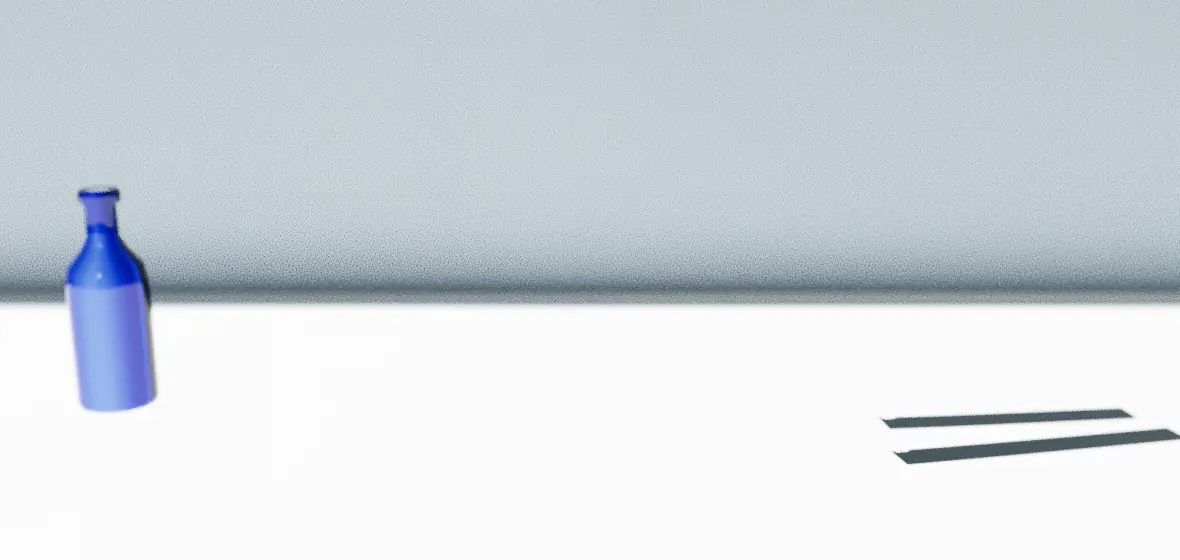

The whole back: 1945 to 1952. It turns 100 between 2045 and 2052.
- NEW YORK 10, N.Y. 1943 to 1963
- MADE IN OCCUPIED JAPAN 1945 to 1952
- HAND PAINTED no year in it
Made in Occupied Japan
It means made for export while the Allies ran Japan, 1945 to 1952. On February 20, 1947, Allied headquarters ordered the words onto exports, their containers and the outside package. On December 5, 1949, a second order let exporters choose those words, “Made in Japan” or just “Japan,” because the mark was “impeding sales of Japanese exports.” The occupation itself ended on April 28, 1952.
So March 1947 to December 1949 is likeliest, though a slide-rule maker used the words from 1946. It was ordered on every kind of export, so it tells you when, and nothing about how good or how scarce.
Which words went on exports from Japan, month by month
- Nippon not allowed
- Japan not allowed
- Made in Japan not allowed
- Made in Occupied Japan allowed
- NIPPON
- JAPAN
- MADE IN JAPAN
- MADE IN OCCUPIED JAPAN
usual word no order ordered
July 1948. Ordered: Made in Occupied Japan, and nothing else, on every export, its container and its outside package.
Nippon
On a backstamp it usually means about 1891 to 1921. After that, says Maryland’s archaeological lab, trade agreements called for “Japan.” Make sure it’s the country and not part of a firm’s name: a harmonica box in the Smithsonian reads NIPPON GAKKI CO. LTD, and it’s from 1990.
Patent numbers
Find the highest U.S. patent number on it: the year it was issued is the earliest year, never the date. On furniture, try the lock and the casters. By the Patent Office’s table, seven-digit numbers beginning with 1 start in 1911, 2 in 1935, 3 in 1961, 4 in 1976, 5 in 1991 and 6 in 1999. A date instead of a number is older; use the last date like the highest number.
Don’t take it too literally. On 31 kitchen and ironing things in the Smithsonian’s open records, by our count, the newest number runs a median of two years behind the museum’s date and the oldest nine. Design patents are counted separately: a push-button blender is stamped 2,109,501 and 201,169. Look the second up as an ordinary patent and you own a blender from 1878. It’s a design patent of May 18, 1965, and the museum says about 1965. “Pat. Pend.” gives no date at all.
All 31: take the newest number and the error shrinks
Press a plate for its numbers.
Manning-Bowman coffee urnabout 1928
1,475,334 is 1923; 1,551,504 is 1925; 1,524,417 is 1925. Newest 3 years before it.
Duplex cream whipper1929 to 1940
1,322,874 is 1919; 1,726,977 is 1929. Newest the same year.
Juicit juicer1934 to 1940
1,962,856 is 1934. Newest the same year.
Toastmaster toaster, 1B51935 to 1936
1,698,146 is 1929; 1,387,670 is 1921; 1,394,450 is 1921; 1,676,257 is 1928; 1,866,808 is 1932; 18,923 (reissue) is 1933; 1,858,196 is 1932; 1,858,197 is 1932. Newest 2 years before it.
Toastmaster toaster, 1A41936 to 1937
1,698,146 is 1929; 1,387,670 is 1921; 1,394,450 is 1921; 1,676,257 is 1928; 1,866,808 is 1932; 18,923 (reissue) is 1933. Newest 3 years before it.
Kwik Way toasterabout 1936
1,756,784 is 1930; 2,005,364 is 1935; 2,029,575 is 1936. Newest the same year.
American Beauty tailor’s ironabout 1936
1,934,131 is 1933; 1,985,100 is 1934; 1,986,346 is 1935. Newest 1 year before it.
Tel-A-Matic ironabout 1937
1,481,021 is 1924; 1,951,176 is 1934; 99,170 (design) is 1936. Newest 1 year before it.
Universal coffee makerabout 1937
1,927,287 is 1933; 1,931,076 is 1933; 106,778 (design) is 1937; 2,067,470 is 1937. Newest the same year.
Durabilt travel ironabout 1938
2,086,240 is 1937; 2,045,284 is 1936; 2,119,964 is 1938. Newest the same year.
Toastmaster toaster, 1B81938 to 1939
1,698,146 is 1929; 1,394,450 is 1921; 1,387,670 is 1921; 2,001,362 is 1935; 1,866,808 is 1932; 2,036,178 is 1936; 18,923 (reissue) is 1933; 1,858,196 is 1932; 1,858,197 is 1932. Newest 2 years before it.
Sunbeam sandwich toaster, Model Babout 1939
1,465,007 is 1923. Newest 16 years before it.
Sunbeam sandwich toaster, No. 4about 1939
1,465,007 is 1923. Newest 16 years before it.
Juicit juicerabout 1940
1,962,856 is 1934. Newest 6 years before it.
Kwikway sandwich toasterabout 1940
2,014,001 is 1935; 2,040,369 is 1936; 2,179,761 is 1939; 96,481 (design) is 1935. Newest 1 year before it.
Kwik Way travel ironabout 1940
2,039,222 is 1936; 1,951,176 is 1934; 2,136,763 is 1938. Newest 2 years before it.
Androck bowl mixer1941 to 1950
2,210,810 is 1940. Newest 1 year before it.
Doverite ironabout 1941
2,039,222 is 1936; 1,951,176 is 1934; 2,136,763 is 1938. Newest 3 years before it.
Sunbeam Coffeemaster, C30Cabout 1946
1,994,323 is 1935; 2,223,450 is 1940; 2,312,555 is 1943; 2,345,262 is 1944; 2,345,264 is 1944; 2,345,265 is 1944; 113,512 (design) is 1939; 113,513 (design) is 1939; 113,514 (design) is 1939. Newest 2 years before it.
Sunbeam Coffeemaster, C20-Babout 1946
1,994,323 is 1935; 2,223,450 is 1940; 113,512 (design) is 1939; 113,513 (design) is 1939; 113,514 (design) is 1939. Newest 6 years before it.
Tip-Toe ironabout 1946
2,065,366 is 1936. Newest 10 years before it.
Steam-O-Matic ironabout 1947
2,178,512 is 1939; 2,279,179 is 1942; 2,338,739 is 1944. Newest 3 years before it.
American Beauty iron, 79AB1947 to 1956
121,163 (design) is 1940; 121,164 (design) is 1940; 22,048 (reissue) is 1942; 1,916,671 is 1933; 2,256,147 is 1941; 2,270,316 is 1942; 2,300,230 is 1942; 2,328,152 is 1943. Newest 4 years before it.
Sunbeam toaster, T-20about 1949
2,197,221 is 1940; 2,254,687 is 1941; 2,332,518 is 1943; 2,347,385 is 1944; 2,361,446 is 1944; 2,390,947 is 1945; 2,459,169 is 1949; 2,459,170 is 1949. Newest the same year.
Ekco bottle opener1951 to 1965
2,571,401 is 1951. Newest the same year.
K-M corn popperabout 1951
2,194,852 is 1940; 163,531 (design) is 1951. Newest the same year.
Waring Blendorabout 1959
2,109,501 is 1938. Newest 21 years before it.
Hand mixer1959 to 1970
2,390,544 is 1945; 2,906,510 is 1959. Newest the same year.
Waring push-button blenderabout 1965
2,109,501 is 1938; 201,169 (design) is 1965. Newest the same year.
Farberware percolatorabout 1966
2,817,743 is 1957. Newest 9 years before it.
Seal-a-Meal IIabout 1977
4,021,290 is 1977. Newest the same year.
oldest number, 9 years behind; newest, 2: the medians of all 31.
Called out, and left out
Waring Blendor, about 1959: one number stamped on it, 1938. Twenty-one years behind. Its entry also lists a 1959 patent for the ice crusher. The record.
Doverite iron, about 1941: the plate carries its own date, 11-41, and a tag kept with it says made in November ’41. Its newest number is from November 1938. The record.
Left out, because its date is a decade and its number is on another part: a Hygeia nursing bottle the museum puts in about the 1920s, with a rubber nipple whose patent was issued on July 25, 1933. The record.
How it was counted, read November 24, 2026
Counted here: kitchen and ironing things whose entries quote a seven-digit U.S. patent number off the thing itself and give one date made, a year or a range of years. Some are near twins: three Toastmasters, two Juicits, two Coffeemasters. Design and reissue numbers are counted; the first year of a range is taken. From the Smithsonian’s open records and the Patent Office’s table of years.
ZIP codes, phone numbers and barcodes
- ZIP Code or zone: five digits after the state is July 1, 1963, or later. One or two between city and state is 1943 to 1963, give or take a lace maker whose 1974 label still says New York 10, N.Y.
- State: the two capital letters were settled on in October 1963.
- Phone: area codes were set up in 1947; 800 numbers began in 1967, 888 in March 1996.
- Barcode or web address: the first barcode was scanned on June 26, 1974, and the web went public in August 1991.
- Triangle in plastic: the digit inside chasing arrows was developed in 1988.
The late ones catch reproductions: a Victorian-looking tin sign with a web address along its edge is from 1991 at the earliest.
Clothes
- ILGWU: the garment workers’ union adopted a label in 1900, though in 1936 just 32 firms were using one. The industry-wide label was launched January 9, 1959, and turned red, white and blue in 1974; the union merged into UNITE in 1995.
- Other emblems: AFL-CIO on any union label is 1955 or later, and a blue eagle is 1933 to 1935.
- RN: the Federal Trade Commission gives a company one number to print instead of its name, with no year in it. Look it up at rn.ftc.gov.
- Fiber percentages: the law on clothes with wool in them since July 1941, and on the rest since March 1960.
- Care: sewn-in labels have been the law since July 3, 1972, and symbols with no words were allowed from July 1, 1997.
Bottles
- FEDERAL LAW FORBIDS SALE OR RE-USE OF THIS BOTTLE was required on liquor bottles from 1935 to 1964.
- Duraglas in script on the base is about 1940 to 1963, and liquor measured only in pints or quarts was bottled before 1980.
- GOVERNMENT WARNING has been the law since November 18, 1989.
- A mold seam that climbs over the lip is machine work, after about 1900 on a wide mouth and about 1910 on a narrow one.
Silver and gold
Sterling and 14K give no date; a British hallmark does. Its date letter was compulsory until 1999, a different set at each assay office until 1975, so find the office’s mark first. Here, the federal stamping law forbids makers and dealers to ship across state lines gold or silver goods made after June 13, 1907, and marked finer than they are, but it requires no mark.
Real or copied
Marks can prove a thing is too new, and they can’t prove it is old enough. A word is easy to print, Nippon and Occupied Japan included. In the Cleveland Museum of Art, a jar and a bowl carry the same six characters: made in the Ming dynasty, Jiajing period. The museum dates the jar 1522 to 1566. It dates the bowl 1662 to 1722 and calls its mark apocryphal. The floor held both times.
A box can be newer than what is in it. The Smithsonian has an American Beauty iron of about 1936 in what it calls the original crate, whose label says Detroit 2, Mich., and zone numbers start in 1943. It also says direct current only, and the iron takes only alternating. On the marks alone that is an iron and a label that disagree twice.
Every age has its marks: ring by ring, and where to look
1840Before 1891. No country name required
- Plate:
- Diamond, letter left 1842–1867
- Royal about 1851
- Ltd about 1862
- Trade Mark about 1863
- Diamond, letter right 1868–1883
- Rd No 1884
- Plate:
18911891 to 1921. Patent 1,000,000 in 1911
- Plate:
- A country in English about 1891
- Nippon about 1891–1921
- Made in about 1901
- Czechoslovakia 1918–1992
- Metal:
- Reg. U.S. Pat. Off. about 1905–1975
- Cloth and bottle:
- Seam over the lip about 1900
- Plate:
19211921 to 1941. Patent 2,000,000 in 1935
- Plate:
- Japan about 1921
- Yugoslavia 1929–2003
- Cloth and bottle:
- NRA blue eagle 1933–1935
- “Federal Law Forbids” about 1935–1964
- Duraglas about 1940–1963
- Plate:
19411941 to 1952. Zones, occupations, ®
- Plate:
- U.S. Zone Germany 1945–1949
- Occupied Japan 1945–1952
- Pakistan 1947
- West Germany 1949–1990
- P.R.C. 1949
- GDR or DDR 1949–1990
- Metal:
- ® about 1947
- Paper:
- Postal zone 1943–1963
- Area code 1947
- Cloth and bottle:
- WPL number 1941
- Wool percentages about 1941
- Plate:
19521952 to 1963. Patent 3,000,000 in 1961
- Cloth and bottle:
- Fur label about 1952
- AFL-CIO 1955
- ILGWU industry-wide about 1959–1995
- Fiber percentages about 1960
- Cloth and bottle:
19631963 to 1974. ZIP July 1, 1963
- Paper:
- ZIP Code 1963
- Two-letter state about 1963
- Cigarette “Caution” about 1966–1970
- Toll-free 800 1967
- “Has Determined” about 1970–1985
- Cloth and bottle:
- Care label about 1972
- Paper:
19741974 to 1990. Patent 4,000,000 in 1976
- Metal:
- Reg. U.S. Pat. & Tm. Off. 1975
- EnergyGuide about 1980
- Numbered triangle 1988
- FCC Part 15 about 1989
- Paper:
- Barcode about 1974
- Nine-digit ZIP 1983
- Rotating warnings about 1985
- Cloth and bottle:
- ILGWU in color about 1974–1995
- Quarts and pints to 1979
- Contains sulfites about 1987
- Government Warning about 1989
- Metal:
19901990 to now. Patent 10,000,000 in 2018
- Plate:
- USSR to 1991
- Czech Republic, Slovakia 1993
- Metal:
- Pat. and a web address about 2011
- Paper:
- Web address 1991
- QR code 1994
- Choking hazard about 1995
- 13-digit ISBN about 2007
- Cloth and bottle:
- Care symbols alone about 1997
- Plate:
1941 to 1952. Zones, occupations, ®. Plate: U.S. Zone Germany 1945 to 1949; Occupied Japan 1945 to 1952; Pakistan 1947; West Germany 1949 to 1990; P.R.C. 1949; GDR or DDR 1949 to 1990. Metal: ® about 1947. Paper: Postal zone 1943 to 1963; Area code 1947. Cloth and bottle: WPL number 1941; Wool percentages about 1941.
Two minutes in the house
Look in this order:
- Paper: label, box or instruction sheet, the address and the phone number first, if the paper belongs to the thing.
- Country: on the base, and whether it still exists.
- The highest number after Pat., or the last date: copy them all down.
- Anything too new: ®, a triangle, a barcode, a web address.
- The parts: lid, cord, plug and base, one at a time.
- A photograph of all of it, at a slant to the light if it’s worn.
Todd Larsen, who has run Triumphant Estate Sales in Los Angeles for over 20 years, says on its site to turn things over: labels are often small and “in places nobody checks.” Darren Hahnfeld, founder of iStuffSellers in Rockville, Maryland, adds one rule on his: “Don’t clean, polish or refinish anything.”
Antique and vintage are lines too. In the federal tariff schedule, antiques are “of an age exceeding 100 years.” No mark proves that: three of the 55 drawn above had usually stopped by then, and 41 began after. Etsy’s rule for its sellers calls a thing vintage at 20.
If two marks can’t both be true, believe the later start and pay for the newer thing. If there are none, you are buying the look of it, so pay for the look. None of this is an appraisal. it’s a date. Check before you pay, because nearly every estate sale company that posts a return rule says final, no refunds or as-is (the census, November 24, 2026).
The laws on this page are federal; states differ, and none of this is legal advice.
How this guide was made
Researched and drafted with AI help from the sources linked above, and checked against them by a second AI reader (how we check). Corrections: our corrections page.
- Written by
- Estate Sales Near Me staff (who we are)
- Sources last read
- (how we check)
- Linked in the text
- 53 pages on 29 websites
All 29, by address
about.usps.com, apps.jefpat.maryland.gov, si.edu, collections.vam.ac.uk, americanhistory.si.edu, history.state.gov, jahis.law.nagoya-u.ac.jp, nationalarchives.gov.uk, web.archive.org, docs.fcc.gov, ftc.gov, qrcode.com, govinfo.gov, ilgwu.ilr.cornell.edu, fraser.stlouisfed.org, museumofroyalworcester.org, registry.opendata.aws, gs1us.org, w3.org, newsroom.astm.org, rn.ftc.gov, law.cornell.edu, federalregister.gov, theassayoffice.co.uk, clevelandart.org, triumphantestatesales.com, istuffsellers.com, hts.usitc.gov, help.etsy.com - Published
- This site
- Independent: sells nothing, and is paid by none of the companies it names or links to.
- Found a mistake?
- Corrections · Editorial policy


