What Not to Sell at an Estate Sale, Room by Room, and Where Each Thing Can Legally Go Instead

Walk the house with a flashlight: 54 things, the 20 among them that federal law bars in every state, what needs a license or proof, and a way out for each.
What not to sell at an estate sale, in any state, starts with old cribs, prescriptions, mounted ducks and Social Security cards. They are among the 20 things federal law bars any household from selling, out of 54 in this guide.
Of the rest, some go through a license or an office, some sell only on a condition you can prove, and a few are legal with care. Each comes with its law and a way out.
A living room is no exception. The Consumer Product Safety Commission (CPSC) tells resellers its rules reach “individuals holding yard sales and flea markets,” and the recall law says “any person.” The fine people quote, up to $120,000 a violation on the 2021 scale (a new one is due for 2027), is for sellers who knew, or would have with due care. Yours can start with one evening, a flashlight and a phone: lock up the guns, put the pills, the papers and the jewelry in one room, and mark every wild bird “not for sale.” The rest of tonight’s list is at the end.
These are rules, not legal advice, read November 24, 2026. States differ; our state counts cover 17 of them, each read in part.
So turn off the lights and go through the house like an inspector, attic to porch. Eighteen of the 54 are waiting in the dark.
Eighteen things in the dark
They are 18 of the 54 in this guide. Move the light over the house: tap, or drag it sideways. What it finds stays lit, with its law and the way out.


Eagle-feather fan, in the open trunk.
Never.
Buying or selling any part of a bald or golden eagle is a federal crime, however old it is (16 U.S.C. 668).
Way out: The National Eagle Repository takes eagle remains from the public, 303-287-2110.
Found 1 of 18.
All eighteen, as a list
Attic
- Eagle-feather fan, in the open trunk. Never. Buying or selling any part of a bald or golden eagle is a federal crime, however old it is (16 U.S.C. 668). Way out: The National Eagle Repository takes eagle remains from the public, 303-287-2110.
- Old crib, taken apart, standing flat behind the cardboard boxes. Never. Made before June 28, 2011, with no written proof it meets the standard, or with a side that drops, it may not be sold (16 CFR 1219.1(b)). Way out: Break the slats before it goes out.
- Tin train, in the top box by the suitcases. Legal, with care. The lead limit skips a used children's product sold by the household that used it, unless you know it breaks the limit (15 U.S.C. 1278a(b)(7)). Way out: Check the maker for recalls, then tag it.
Bedroom
- Cedar chest, at the foot of the bed. Only if the automatic lock is out. Lane and Virginia Maid chests made from 1912 to 1987 latch themselves and were recalled. CPSC also wants a lid that stays up by itself and holes or a gap for air (CPSC releases 96-186, 00-084; CPSC Resellers Guide, p. 46). Way out: Shut the lid without touching the button. If it holds, take the lock out.
- Mattress, under the quilt. Only if your state allows it. Virginia excuses any sale of a decedent's estate; Arizona wants a yellow tag when the sale is through an agent (State law; CPSC Resellers Guide, p. 45). Way out: Check its federal label (CPSC advises against reselling one made before 2007), then your state's breaker on the panel below.
- Mink coat, on the clothes rail. Legal, with care. Even California, which bans new fur, lets a used coat be sold (California Fish and Game Code 2023). Way out: In California, keep a record of the sale for a year.
Study
- Shotgun, in the corner by the bookcase. Through a licensed dealer. A price tag can't ask a buyer's state or record. A dealer does, and at least nine of the panel's 17 states require one, or a background check, in between (18 U.S.C. 922). Way out: A licensed dealer sells it, or runs the transfer to an heir.
- Social Security card, in the top drawer of the filing cabinet. Never. Buying or selling one is a felony, up to five years, and the card is the government's property (42 U.S.C. 408(a)(7)(C)). Way out: Keep it with the estate papers.
- Framed medals, on the wall over the desk. Only if regulations allow it. The Army's rule clears medals that carry a certified maker's hallmark, does not authorize the Medal of Honor for sale, and is silent on heirlooms (18 U.S.C. 704; 32 CFR 507.8). Way out: Keep them in the family.
- Grenade on a wooden base, on the desk. Never. If it is live it is a destructive device, not to be kept or passed on unregistered, and nobody can tell by looking (26 U.S.C. 5845(f), 5861). Way out: Don't lift it to look. Leave the room and call 911.
Kitchen
- French press, on the counter by the stove. Only if it has been repaired. Bodum recalled 5.9 million on October 29, 2026. The repair is a plastic spoon and a warning label (CPSC Resellers Guide, p. 2). Way out: Ask for the spoon and the label; sell it with both.
- Pill bottles, on the shelf above the sink. Never. A prescription medicine may be dispensed only on a prescription; any other way is misbranding (21 U.S.C. 353(b)(1)). Way out: A pharmacy drop box or the police. Nobody may count or sort what goes in.
Living room
- Mounted mallard, on the wall over the sofa. Never. The hunting rules bar the sale, purchase and barter of mounted ducks and geese; only a mallard raised in captivity and marked gets out of them (50 CFR 20.91(b), 21.45). Way out: Let a relative take it home.
- Upright piano, against the left wall. Only if its papers say so. Many pianos with ivory keys can fit the federal small-amount exception if they meet every test of it; California wants proof it was made by 1975, New York a permit (50 CFR 17.40(e)(3); state law). Way out: Sell it with its papers, inside your own state.
- Sealed bourbon, on the side table under the lamp. Through whatever route your state has. Selling takes a license; five of the eight states read have a route for a private owner's bottles (State law). Way out: Your state's breaker on the panel below, or the state alcohol agency.
Garage
- Two cans of R-12, on the workbench. Only to a certified technician. Federal rules let a shop that employs one buy it too (40 CFR 82.154(c)). Way out: Call a shop with a certified technician.
- Can of DDT, on the shelf of the pegboard. Never. Its registration was canceled in 1972; selling it, or holding it for sale, is unlawful (7 U.S.C. 136j(a)(1)(A)). Way out: The county's household hazardous waste day.
Porch
- Lawn darts, under the bench. Never. Banned since December 19, 1988, new or old (16 CFR 1306.3). Way out: Blunt them and put them in the trash.
What federal law bars outright
Federal law bars 20 things outright, in every state, with a few narrow exceptions. Here they are by room, with where each can go instead:
- Attic: old cribs (destroy them), eagle feathers (the National Eagle Repository), mounted songbirds, owls and hawks (ask the Fish and Wildlife Service). Also Native American human remains, and grave goods taken against the federal graves act (bones to the coroner, the rest to the tribe or the state historic preservation office).
- Bedroom: inclined sleepers (the recall’s remedy if there is one, then destroy them), padded crib bumpers (throw them away), and a handbag you know is fake (keep it or destroy it).
- Bathroom, and the shelf over the sink: controlled pills (a pharmacy drop box, or the police) and every other prescription (the same box if it takes them, or FDA’s trash steps).
- Study: a Social Security card (with the estate papers), a federal badge (back to its agency), the Medal of Honor (in the family). A machine gun or a live shell nobody registered stays where it lies: a lawyer, then the police, for the gun; 911 for the shell.
- Kitchen: anything under a recall nobody has repaired (do what the recall says).
- Living room: a mounted wild duck or goose (a relative may take it home).
- Garage: canceled bug killer and old paint stripper (the county’s hazardous waste day), dynamite or blasting caps (leave the room and call 911).
- Porch: lawn darts (blunted, then the trash).
All 54 stand on these four shelves, each box with its law, its penalty and its way out:
Fifty-four things on four shelves
Old crib
Crib made before June 28, 2011, or any with a side that drops. The federal crib standard has covered used cribs since June 28, 2011, and CPSC says no drop-side crib can meet it (16 CFR 1219.1(b)). Way out: Break the slats before it goes out. Written proof that a fixed-side crib meets the standard is the only thing that saves one.
Inclined sleeper
Inclined infant sleeper, steeper than 10 degrees. Banned whatever its date of manufacture (15 U.S.C. 2057d). Way out: Do not give it away either. If it was recalled, the maker's remedy comes first; then destroy it.
Crib bumper
Padded crib bumper. Banned whatever its date of manufacture. A non-padded mesh liner is not covered (15 U.S.C. 2057e). Way out: Throw it away.
Recalled, not repaired
Anything under a recall that has not been repaired. No person may sell a product under an announced recall (15 U.S.C. 2068(a)(2)(B)). Penalty: Up to $120,000 a violation on the 2021 scale, for a seller who knew or would have with due care. Way out: Follow the recall: repair, replacement or refund. If there is no remedy left, destroy it.
Lawn darts
Lawn darts. A banned product since December 19, 1988, new or old (16 CFR 1306.3). Way out: Blunt them and put them in the trash.
Eagle feathers •
Eagle feathers, fans, headdresses, mounts. Buying or selling any part of a bald or golden eagle is a crime, however old it is (16 U.S.C. 668). Penalty: Up to $100,000, a year in prison, or both, the first time (Fish and Wildlife Service). Way out: The National Eagle Repository takes eagle remains from the public: 303-287-2110.
Songbird, owl, hawk •
Mounted songbird, owl or hawk; a hat trimmed with one. The law protects more than 1,000 native kinds; neither the mount nor a feather may be sold, however old (16 U.S.C. 703). Penalty: Up to $15,000 or six months; a knowing sale is a felony, up to two years (16 U.S.C. 707). Way out: Call the Fish and Wildlife Service before it leaves the house.
Mounted duck •
Mounted wild duck or goose. The hunting rules bar the sale, purchase and barter of mounted ducks and geese. A mallard raised in captivity and marked is the one way out (50 CFR 20.91(b), 21.45). Way out: The rule is about selling. Let a relative take it home.
Controlled pills
Opioids, sedatives and other controlled medicines. Passing them along is a crime; whoever lawfully settles the estate may hand them to a registered collector or the police (21 U.S.C. 841(a)(1)). Way out: A pharmacy drop box or the police. Finder: 1-800-882-9539. With neither in reach, FDA's flush list says which to flush.
Prescription pills
Any other prescription medicine. It may be dispensed only on a prescription. Any other way is misbranding, a prohibited act whether or not it is the first sale (21 U.S.C. 353(b)(1), 331(k)). Way out: The same drop box may take it; without one, FDA's trash steps.
Social Security card •
Social Security card. Buying or selling one is a felony, and the card is the government's property (42 U.S.C. 408(a)(7)(C)). Penalty: Up to five years. Way out: Keep it with the estate papers.
Federal badge
Federal agency badge or ID card. It can't be sold, or even kept, without authority (18 U.S.C. 701). Penalty: Up to six months. Way out: Send it back to its agency.
Medal of Honor •
Medal of Honor. Selling a medal is a crime unless a rule allows it, and the Army's rule does not authorize this one for sale outside a government contract (18 U.S.C. 704; 32 CFR 507.14). Penalty: Up to a year. Way out: Keep it in the family.
Unregistered machine gun
Machine gun nobody registered. It may not be transferred or even possessed (18 U.S.C. 922(o); 26 U.S.C. 5861(d)). Penalty: Up to 10 years. Way out: Don't move it. Call a lawyer, then the police.
Grenade, shell
Unregistered live grenade or shell from a war. A destructive device under the National Firearms Act; unregistered, it may not even be kept (26 U.S.C. 5845(f), 5861). Penalty: Up to 10 years. Way out: Don't lift it to look. Leave the room and call 911.
Dynamite
Dynamite, blasting caps. Nobody without a federal license or permit may pass explosives to anyone else without one (18 U.S.C. 842(a)(3)). Way out: Don't touch it. Leave the room and call 911.
Canceled pesticide
Canceled bug killer, such as DDT. Selling it, or holding it for sale, is unlawful unless EPA has allowed it. DDT was canceled in 1972 (7 U.S.C. 136j(a)(1)(A)). Way out: The county's household hazardous waste day; never the drain.
Old paint stripper
Paint stripper with methylene chloride. Off limits to consumers since November 22, 2019; the rule's "retailer" is anyone who makes it available to them (40 CFR 751.105). Way out: The county's household hazardous waste day.
Known fake
Handbag, watch or jersey you know is fake. Selling goods under a mark you know is a counterfeit of a registered one is a crime (18 U.S.C. 2320). Penalty: Up to 10 years. Way out: Keep it or destroy it.
Grave goods •
Native American remains, or grave goods taken against the law. Selling or buying remains without the right of possession is a crime; so is selling or buying cultural items taken in violation of the federal graves act (18 U.S.C. 1170). Penalty: Up to a year and a day for remains, the first time. Way out: Bones: the coroner. The rest: the tribe, or the state historic preservation office.
20Never
Federal law bars any household from selling it, apart from the narrow ways out each box names.
Passport
Passport, expired or not. It remains the property of the United States at all times and goes back on demand. Don’t price it (22 CFR 51.7(a)). Way out: Keep it with the estate papers, or ask the State Department.
Gun
Rifle, shotgun or pistol. No sale to someone from another state or a barred buyer; at least nine of the panel's 17 states want a dealer or a background check in between (18 U.S.C. 922). Penalty: Up to five years for a willful sale across a state line, up to 15 for a knowing sale to a barred buyer. Way out: A licensed dealer, who can sell it or run the transfer to an heir.
Registered NFA gun
Registered silencer, short-barreled rifle or machine gun. The executor may hold it while probate runs (27 CFR 479.90a). Penalty: Up to 10 years. Way out: ATF Form 5 for an heir, Form 4 if no heir wants it, filed before probate closes. A machine gun can move only if it was lawfully held before May 19, 1986 (18 U.S.C. 922(o)).
Sealed bottle
Sealed liquor, wine or beer. Selling takes a license; five of the eight states read have a route for a private owner's bottles (State law). Way out: California, Kentucky, New York, Virginia and Washington: see the panel. Elsewhere, the state alcohol agency.
R-12, R-22
R-12 or R-22 refrigerant. Sold only to a certified technician or a shop that employs one (40 CFR 82.154(c)). Way out: Call a shop with a certified technician.
CPAP
CPAP or any device marked "Rx only". A prescription device, and possibly the supplier's: title to Medicare-paid rental equipment passes only after the 13th month of payments (21 CFR 868.5273, 801.109). Way out: Call the number on the sticker.
The car
Car still titled to someone who has died. The title has to be put right before anyone can sell it. A 2011 or newer model also needs an odometer statement (State title law; 49 CFR 580.17). Way out: The state's motor vehicle office: Texas, Florida and California take a signed statement from heirs who agree, where the estate needs no probate.
Bones
A skull or bones. Washington makes telling the coroner and the police everyone's duty; Texas makes selling any part of a body a felony (RCW 68.50.645 (Washington)). Way out: The coroner.
8Through a license, an office or its owner
A licensed dealer, a public office or the thing's real owner has to be in the middle.
Newer crib
Crib made after June 28, 2011. Only if it has every part, a permanent date stamp and no recall (16 CFR 1219.1(b)). Way out: Missing a part or the stamp: destroy it.
Recalled, repaired
A recalled thing, repaired as its recall says. Only if the recall's own repair has been made. For a Bodum French press that is a plastic spoon and a warning label (CPSC Resellers Guide, p. 2). Way out: Ask for the remedy; keep its letter with the thing.
Cedar chest
Cedar chest that latches itself (Lane, Virginia Maid, 1912 to 1987). Only if the automatic lock is out, the lid stays up by itself and air can get in. About 12 million were made; seven children had suffocated in them by 2000 (CPSC releases 96-186, 00-084; CPSC Resellers Guide, p. 46). Way out: Take the lock out. No lid support, or no holes or gap for air: CPSC says destroy it.
Old chest freezer
Chest freezer from before 1970. Only if the lid opens by pulling up its sides, or the latch is disabled (CPSC recall 01016). Way out: Disable the latch or have it hauled.
Toy chest
Toy chest with a hinged lid. Only if its lid stays open in any position, it has air holes and no automatic latch (CPSC Resellers Guide, p. 30). Way out: Otherwise CPSC says destroy it.
Bunk bed
Bunk bed. Only if it has every guardrail and label the standard asks for, and no recall (16 CFR 1213). Way out: Otherwise CPSC says destroy it.
Car seat
Child car seat. Only if it is under no open recall and within the date on its label (49 U.S.C. 30120(j)). Way out: Cut the straps before it goes out.
Mattress
Used mattress. Only as your state allows: Virginia excuses an estate, Arizona not an agent. Made after July 1, 2007, it needs its federal label; CPSC advises against reselling one made before 2007 (State law; CPSC Resellers Guide, p. 45). Way out: No label, or no way to sell it: have it hauled.
Ivory •
Ivory carving or jewelry. Only with proof. Across a state line: a 100-year antique, or a larger item that meets every federal small-amount test, under 200 grams among them. Under the six state laws read, age alone never saves a solid carving (50 CFR 17.40(e); state law). Way out: Leave it to an heir: Oregon and Washington exempt that, and New York can permit it.
Piano
Piano with ivory keys. Only with papers: many can fit the federal small-amount exception if they meet every test of it, and California wants proof it was made by 1975 (50 CFR 17.40(e)(3); state law). Way out: Sell it with its papers, inside your own state.
Walrus, whale, polar bear
Walrus ivory, whale tooth, polar bear. Only if it predates December 21, 1972, or is an Alaska Native handicraft; for whale teeth and bone, ask NOAA first (16 U.S.C. 1372(a)(4); 50 CFR 216.14). Way out: Keep it, with whatever shows its age.
Tortoiseshell
Tortoiseshell comb, sea turtle boots. Only inside your own state, and only where its law allows. New York's does not (USFWS "Can I sell it?"; NY ECL 11-0536). Way out: Keep it or ask the Fish and Wildlife Service.
Big cat, grizzly
Jaguar, grizzly, tiger or leopard: a rug, a coat. Jaguar and grizzly: never across a state line without a permit, however old. Tiger and leopard: the same, an antique of 100 years aside. New York bars tiger and leopard outright (USFWS "Can I sell it?"; 16 U.S.C. 1538(a)(1)(F), 1539(h); NY ECL 11-0536). Way out: Keep it or ask the Fish and Wildlife Service.
Deer head
Deer head. California: no. Texas: yes. Pennsylvania: through a licensed auctioneer. North Carolina: ask for a Trophy Wildlife Sale permit (State law). Way out: Your state's wildlife agency.
Slot machine
Slot machine. Montana lets you sell an antique one and Florida forbids selling any; the antique rules of California, New York, Pennsylvania and Washington do not address selling (State law; 15 U.S.C. 1172). Way out: Ask the state gambling agency; in Montana, a buyer in the state.
Service medal •
Service medal, ribbon or badge. Only if regulations allow: the Army's clears medals with a certified maker's hallmark and is silent on heirlooms (18 U.S.C. 704; 32 CFR 507.8). Penalty: Up to six months; a year for a service cross, Silver Star, Purple Heart or combat badge. Way out: Keep it in the family.
Thermometer
Mercury thermometer. Washington: no one may sell one, narrow exceptions aside. Illinois: no fever thermometers since July 1, 2004. Minnesota: no manufacturer, wholesaler or retailer, if made after June 1, 2001 (State law). Way out: Seal it in a jar and take it to a mercury collection.
Children's jewelry
Children's metal jewelry. Only if it is at or under 100 parts per million of lead; the pass for used children's things leaves it out (15 U.S.C. 1278a(b)(7)). Way out: Can't test it: don't sell it.
Ammunition
Ammunition. Only to a lawful buyer; California sends a sale outside the immediate family through a licensed vendor (18 U.S.C. 922(d)). Penalty: Up to 15 years for a knowing sale to a barred buyer. Way out: The gun dealer who takes the guns.
Arrowheads, pots
Arrowheads and pots. Only if they did not come off federal or Indian land against the law (16 U.S.C. 470ee(b)). Way out: No way to know: ask the state historic preservation office.
20Only on a condition
It sells on a condition you can prove, and the condition may be your state's.
Gun from before 1899
Gun made in or before 1898. Outside the federal definition of a firearm; your state may still count it (18 U.S.C. 921(a)(16)). Way out: Have a dealer date it and say what your state counts.
Old toys
Toys a child in the family played with. The lead limit skips a used children's product sold by the household that used it, unless you know it breaks the limit (15 U.S.C. 1278a(b)(7)). Way out: Check the maker and model for recalls first.
Fur coat
Fur coat. California, which bans new fur, lets a used coat be sold and asks the seller to keep a record of it for a year (California Fish and Game Code 2023). Way out: Not if it is leopard or another protected cat.
Uranium glass
Uranium glass, radium clock. The Nuclear Regulatory Commission generally does not regulate antiques (EPA, Radioactivity in Antiques). Way out: Don't eat off the glass or open the clock; ask the state radiation program about a broken one.
Feather pillow
Feather pillow. The feathers of hunted ducks and geese may be sold for pillows (50 CFR 20.91). Way out: Arizona counts a pillow as bedding, like a mattress.
Native-style jewelry
Bracelet, rug or pot in a Native style. Legal to sell; unlawful to sell it in a way that falsely suggests it is a tribe's work (18 U.S.C. 1159). Penalty: Knowing, under $1,000: up to $25,000 or a year. Way out: Leave the tribe's name off the tag.
6Legal, with care
Lawful, with one thing to mind.
• The law names the buyer as well.
A shopper can break some of the same laws. The eagle, migratory bird, medal and Social Security statutes name the buyer, and so do the six state ivory laws on the panel. Put it back and tell whoever has the cash box. If you have already paid, the same laws apply when you sell.
The rules, thing by thing
Recalled items, illegal to sell until repaired
A recalled thing stays off the table unless the recall’s own repair has been made. The law bars the sale, and CPSC’s guide clears what has been “repaired in accordance with the recall.”
Bodum recalled 5.9 million French presses on October 29, 2026; the cure is a plastic spoon and a warning label. IKEA’s 17.3 million chests and dressers, which tip, get a refund or a free wall kit. Search CPSC’s list, by brand and model, for everything with a cord, a flame, a rung, a drawer or room for a baby.
Two old ones want hands instead of a search:
- Cedar chests: about 12 million Lane chests, made from 1912 to 1987, latch themselves. They and the Virginia Maid chests were recalled, and seven children had suffocated in them by 2000. Shut the lid without touching the button. If it won’t lift, take the lock out or don’t sell it, Connecticut tells resellers. CPSC’s guide says destroy any chest whose lid won’t stay up by itself, or that has no air holes or gap.
- Chest freezers from before 1970: pull up on the sides of the lid. If only the handle opens it, CPSC says disable the latch or get rid of it.
A used mattress, a crib, a car seat
Each has a date to check, and a mattress has your state’s bedding law to pass too.
- Crib: only one made after June 28, 2011, with every part and its date stamp, and no recall. An older crib, or any with a side that drops, gets one word from CPSC, destroy, unless you hold written proof that a fixed-side one meets the standard.
- Car seat: only if it isn’t under an open recall or past its date.
- Mattress: only as your state allows. CPSC says destroy any made after July 1, 2007, without its federal label, and advises against reselling one made before 2007.
Arizona wrote the bedding sentence to read before you hire anyone. Its law leaves alone a householder selling a bed the family slept in, unless the sale is made “through an agent.” Then the mattress has to be treated, cleaned and disinfected and wear a yellow tag.
Virginia goes the other way and excuses “any sale of a decedent’s estate.” Six more states’ bedding rules are on the panel.
Prescription drugs
A prescription medicine may be dispensed only on a prescription. That keeps even the blood pressure pills off the table, and passing along an opioid or a sedative is a crime of its own.
Anyone lawfully entitled to dispose of a dead person’s property may hand the controlled drugs to a registered collector, often a pharmacy, or to the police. What goes into the box may not be counted, sorted or inventoried. Nobody will go through it.
What the pharmacy's drop box takes, shelf by shelf

Nothing in here goes on a table.
Not permitted in any box: Schedule I drugs, and drugs that were never lawfully the owner's. 21 CFR 1317.75(e)(4)
In 1 Maybe 2 Out 2
The door is fully open. Its inside says: Not permitted in any box: Schedule I drugs, and drugs that were never lawfully the owner's (21 CFR 1317.75(e)(4)). Of the five shelves, one goes in the box, two go in if the collector mixes and two stay out.
Painkillers, sedatives, stimulants In the box.
The box takes Schedules II to V, from the person who used them or from whoever lawfully settles the estate (21 CFR 1317.30(b), 1317.75(b)).
Other prescriptions In the box, if the collector mixes.
A collector may take them together with the controlled ones; it does not have to (21 CFR 1317.75(b)).
Drugstore bottles In the box, if the collector mixes.
FDA's take-back advice covers nonprescription medicines too (FDA, Drug Take-Back Options).
Needles and lancets Not in the box.
A sharps container, closed at three-quarters full, then your community's drop-off (FDA, Used Needles and Other Sharps).
Mercury thermometer Not in the box.
Into a larger container with a tight lid, then a mercury collection. Washington bars the sale, narrow exceptions aside (EPA; RCW 70A.230.050).
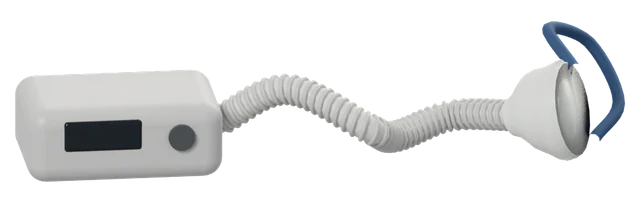
The CPAP on the floor Not in the box. Prescription only, and maybe the supplier's. Call the number on the sticker (21 CFR 868.5273, 801.109).
No box or mail-back envelope within reach: FDA's flush list first, which most opioids are on, then its trash steps for the rest (FDA's Flush List for Certain Medicines, Dispose "Non-Flush List" Medicine in Trash).
With no box or mail-back envelope within reach, read FDA’s flush list first. Oxycodone, hydrocodone, morphine, fentanyl and everything else on it go down the toilet. The rest, left whole, get mixed with dirt, cat litter or used coffee grounds, sealed in a bag and trashed, the label scratched out.
The CPAP by the bed is a prescription device; its label says “Rx only” or names a physician’s order. It may not be yours: title to a machine Medicare rents passes only after the 13th month of payments. Call the number on the sticker.
Prescription glasses can go as frames, with the lenses out. FDA leaves the sale of prescription lenses to state law and wants impact-resistant ones in nearly every pair. Contact lenses, never: a seller needs the wearer’s prescription.
Guns and alcohol at an estate sale
Keep both off the table: a gun goes through a licensed dealer, a bottle through whatever route your state has.
Federal law asks less of a family than people fear. Someone only selling off inherited guns is not presumed to be in the business. An auctioneer at an “estate-type auction” who never buys them or takes them on consignment needs no license, though a tag sale is not an auction.
What it does mind is the buyer. No unlicensed seller may sell to someone they have cause to believe lives in another state, unless the gun passes by will or inheritance. And no seller at all may hand a gun or ammunition to someone they have cause to believe is a felon, a fugitive or an unlawful drug user.
A price tag can’t ask. A dealer does, and at least nine of the 17 states we read put a dealer or a background check between private buyer and seller. They are California, Colorado, Nevada, New York, Oregon, Virginia and Washington, and for some guns Minnesota and Pennsylvania; some make exceptions for heirs.
Bottles belong to the states, and a tag on an unopened bourbon invites an unlicensed sale. Some states have built a door:
- California lets an executor sell to a license holder, or wine to the public on a $100 license.
- Kentucky lets an auctioneer on a 30-day license sell an estate’s unopened bottles.
- New York allows wine alone, to a license holder.
- Virginia’s one-time permit names the estate sale, then limits the buyers to license holders and out-of-state resellers.
- Washington wants $37.50 and five business days’ notice.
The panel below has more on each. elsewhere, ask the state alcohol agency.
In Texas, no alcohol without a permit for liquor or a license for malt beverages, sealed or not. For guns, section 46.06 of the Penal Code lists who may not be sold one; the panel has it in short.
Ivory, taxidermy, eagle feathers
Eagle feathers never, wild birds almost never, ivory only with papers; a deer’s head depends on your state.
The bird laws have no age limit. A hat with a songbird on it stays unsold however old it is. So does the mallard somebody shot and had stuffed, because the hunting rules bar the sale of mounted ducks and geese. Buying or selling any part of an eagle is a federal crime: up to $100,000, a year in prison, or both, the first time. The National Eagle Repository takes eagle remains from the public for members of federally recognized tribes.
Ivory has an age, and it isn’t enough. Across a state line, African elephant ivory sells in two cases. One is a proven antique of 100 years. The other is a small part of something larger that passes every federal test, under 200 grams among them. The proof is the seller’s burden.
In California, Minnesota, Nevada, New York, Oregon and Washington, age alone never saves a solid carving. California even counts giving one away as a sale, at any place that has held a sale this year or last.
A deer’s whole head, antlers on, may not be sold in California. In Texas the antlers, hide and skull may. Pennsylvania lets a licensed auctioneer sell mounts, and North Carolina may grant a Trophy Wildlife Sale permit.
Ivory piano keys often can be sold while they are on the piano. “Many keyboard instruments, with ivory keys” can fit the federal small-amount exception, says the Fish and Wildlife Service. California wants proof it was made by 1975, New York a permit.
Flip your state's breaker: what changes in this house
Federal, every state
Lit: what your state has a line about
- Bones
- Gun
- Mattress
- Thermometer
- Sealed bottle
- Ivory
- Deer head
- Slot machine
- The car
Federal, every state
- Recalled, not repaired. No recalled product until it is repaired as its recall says (15 U.S. Code 2068).
- Mounted duck. No mounted wild duck or goose; no native songbird, owl or hawk, mount or feather; no eagle part (50 CFR 20.91, 16 U.S. Code 703, 16 U.S. Code 668).
- Gun. No gun sold to someone you have cause to believe lives in another state, except by will or inheritance (18 U.S. Code 922).
- Prescription pills. No prescription medicine (21 U.S. Code 353).
- Online. What sells online may cross a state line: no ivory without its papers, and generally no tortoiseshell, big cat or grizzly (50 CFR 17.40, Can I sell it? A Guide to Wildlife and Plant Protection Laws, 16 U.S. Code 1538).
Not on the panel, or no line about the thing in your hand?
The federal lines hold everywhere. For the rest ask the state alcohol agency about bottles, a licensed dealer about guns, the wildlife agency about mounts and ivory, the health or labor department about bedding, the motor vehicle office about the car.
Arizona
- Mattress. A householder may sell the family's own bed; through an agent it must be treated and wear a yellow tag. Couches count (A.R.S. 36-796.07, A.R.S. 36-796.04, A.R.S. 36-796).
California
- Sealed bottle. An executor may sell the estate's bottles to a license holder, and its wine to the public on a $100 special license (Business and Professions Code 23104.4, Business and Professions Code 24045.8).
- Gun. A private gun sale goes through a licensed dealer, and an ammunition sale outside the immediate family through a licensed vendor (Penal Code 27545, Penal Code 30312).
- Mattress. Soiled bedding may not be sold until its cover is cleaned or replaced and it is sanitized; the rule reaches only sellers who need the state's license (Business and Professions Code 19121, Business and Professions Code 19123).
- Ivory. No ivory except under 5 percent of a 100-year antique, or under 20 percent of an instrument made by 1975, with papers. Giving it away where a sale was held this year or last counts as selling (Fish and Game Code 2022).
- Deer head. No whole heads with antlers (Fish and Game Code 3039).
- Fur coat. A used fur coat may be sold; keep a record for a year (Fish and Game Code 2023).
- Slot machine. A slot machine over 25 years old, not used for gambling while its owner had it, is a defense; the rule does not mention selling (Penal Code 330.7).
- The car. Heirs can transfer a car without probate when the estate has nothing else that needs probate, on a certificate under penalty of perjury (Vehicle Code 5910).
Colorado
- Gun. A private gun sale needs a background check through a licensed dealer; an executor's transfer because of the death is excepted (Revised Statutes 18-12-112).
Florida
- Sealed bottle. No selling alcohol without a license (Statutes 562.12).
- Slot machine. Selling a slot machine is unlawful; the 20-year antique defense is for possession (Statutes 849.15, Statutes 849.235).
- The car. Where there was no will, heirs can title a car on an affidavit that the estate owes nothing and that they agree on dividing it (Statutes 319.28).
Illinois
- Thermometer. No mercury fever thermometers since July 1, 2004 (Illinois mercury programs).
Kentucky
- Sealed bottle. A licensed auctioneer with a special license of up to 30 days may auction an estate's unopened bottles; a vintage spirits licensee may buy up to 24 bottles from one seller in 12 months (KRS 243.036, KRS 243.232).
Minnesota
- Sealed bottle. No selling alcohol without a license (Statutes 340A.401).
- Gun. A pistol or a semiautomatic military-style assault weapon goes through a dealer or to a permit holder; excepted are immediate family, the gun's passing to the executor, and an auction by an auctioneer who follows chapter 330, the auction law (Statutes 624.7134).
- Ivory. No tusk, tooth or rhino horn except up to 200 grams fixed in a documented 100-year antique or an instrument. A gift or bequest is not a sale (Statutes 84.0896).
- Thermometer. No manufacturer, wholesaler or retailer may sell a mercury thermometer made after June 1, 2001 (Statutes 116.92).
Montana
- Slot machine. A slot machine made before 1994, or 30 years old, may be sold; more than three in 12 months needs a $50 license (Code Annotated 23-5-153, Code Annotated 23-5-112).
North Carolina
- Deer head. Game animals and their parts may not be sold, processed non-edible products aside; the wildlife agency may issue a Trophy Wildlife Sale permit for a mounted animal (15A N.C. Admin. Code 10B .0118).
- Mattress. Secondhand bedding that shows contamination, or is not clean after a sanitizing process the state accepts, must be destroyed (02 N.C. Admin. Code 61 .0105, 02 N.C. Admin. Code 61 .0102).
Nevada
- Gun. No private gun sale until a licensed dealer has run a background check (Revised Statutes 202.2547).
- Ivory. No elephant, walrus, sea turtle, tiger or other listed parts except a trace fixed in a documented 100-year antique or an instrument (Revised Statutes 597.905).
New York
- Sealed bottle. Wine only, sold to a license holder, each bottle labeled as from a private collection (Alcoholic Beverage Control Law 85).
- Gun. A private gun sale needs a dealer's background check (General Business Law 898).
- Mattress. A private sale from the seller's own home is spared the used-bedding filing (General Business Law 385-a).
- Ivory. No ivory without a permit; antiques of 100 years under 20 percent, instruments made by 1975, and heirs can get one (Environmental Conservation Law 11-0535-a).
- Big cat, grizzly. No tiger, leopard or sea turtle parts (Environmental Conservation Law 11-0536).
- Slot machine. A slot machine made before 1941 is conclusively an antique, a defense if it is not used for unlawful gambling; the rule does not mention selling (Penal Law 225.32).
Ohio
- Mattress. No used bed, couch or stuffed toy until its old tag is off and the state's yellow one is on, with the seller's registration number ($50 a year); antique furniture is excepted. The federal fire label on a mattress stays: without it CPSC says destroy (Adm. Code 4101:6-1-08, Adm. Code 4101:6-1-03, Resellers Guide to Selling Safer Products).
Oregon
- Gun. A private gun sale goes through a dealer; an executor's transfer to a close relative is exempt (Revised Statutes 166.435).
- Ivory. No covered animal parts except under 200 grams fixed in a documented 100-year antique or an instrument; each violation costs up to $6,500 or twice the value, whichever is higher. Heirs are exempt (Revised Statutes 498.022).
Pennsylvania
- Mattress. Auctioneers and secondhand dealers must register, disinfect and use the yellow tag (Bedding and Upholstery).
- Gun. A handgun or short-barreled long gun changes hands at a dealer's or the sheriff's office (18 Pa.C.S. 6111).
- Deer head. Mounted animals may be sold by a licensed auctioneer (34 Pa.C.S. 2312).
- Slot machine. A slot machine made at least 25 years before this year, never used unlawfully, counts as an antique and is given back if seized; the rule does not mention selling (18 Pa.C.S. 5513).
Texas
- Sealed bottle. No selling liquor without a permit, or malt beverages without a license (Alcoholic Beverage Code 11.01, Alcoholic Beverage Code 61.01).
- Gun. No gun to anyone under 18, intoxicated, or a felon within five years of release; no handgun to a person under a protective order (Penal Code 46.06).
- Mattress. The bedding chapter was repealed as of September 1, 2015; the federal label still counts (S.B. 202 of 2015, Resellers Guide to Selling Safer Products).
- Deer head. A deer's antlers, hide, skull and bones may be sold (Parks and Wildlife Code 62.021).
- Bones. Selling any part of a human body, ashes included, is a state jail felony (Penal Code 42.08).
- The car. Court letters, or an affidavit naming all the heirs where no administration is needed (Transportation Code 501.074).
Virginia
- Sealed bottle. A one-time permit names the estate sale; the buyers must hold a license, or live outside Virginia and buy to resell outside it. Selling without one is a Class 1 misdemeanor (Code of Virginia 4.1-212, Code of Virginia 4.1-302).
- Gun. A private gun sale needs a background check through a licensed dealer (Code of Virginia 18.2-308.2:5).
- Mattress. Any sale of a decedent's estate is outside the bedding law, and so is anything 75 years old (Code of Virginia 32.1-225).
Washington
- Sealed bottle. A permit to sell a private collection: $37.50 a sale, at least five business days ahead, with an inventory (RCW 66.20.010).
- Gun. A private gun sale goes through a licensed dealer; antiques are excepted, and so is a gun that came to you by law at its owner's death, though a pistol must be passed on or reported to the state within 60 days (RCW 9.41.113).
- Ivory. No covered animal parts except under 15 percent of a documented 100-year antique or of an instrument. Heirs are exempt (RCW 77.15.135).
- Slot machine. A slot machine at least 25 years old is conclusively an antique, a defense if it was not gambled on; the rule does not mention selling (RCW 9.46.235).
- Thermometer. Since 2006 no one may sell a thermometer that contains mercury, with narrow food, farm, lab and medical exceptions (RCW 70A.230.050).
- Bones. Everyone who knows of skeletal remains must tell the coroner and the police (RCW 68.50.645).
Owning an eagle feather without a permit is illegal too, unless it was lawfully taken before the law protected the bird (June 8, 1940, for bald eagles). Call the Repository before you mail it.
Military medals, badges, Social Security cards
Keep all three off the table.
Federal law makes it a crime to sell a medal or service badge except as regulations allow. The penalty is up to six months, or a year for a Medal of Honor, a service cross, Silver Star, Purple Heart or combat badge. The Army’s rule clears medals that carry a certified maker’s hallmark and does not authorize the Medal of Honor for sale. It says nothing about whatever is in your grandfather’s dresser.
A Social Security card is plainer. Buying or selling one is a felony, up to five years, and the card was the government’s all along. So was the passport, which goes back on demand. A federal badge or ID card can’t be sold, or even kept, without authority.
Slot machines
A slot machine can be sold in Montana if it is an antique one, in Florida not at all; elsewhere, ask the state first. Montana counts one made before 1994 or 30 years old. Florida forbids it, and carrying one into another state is a federal matter.
What can’t be sold out of the garage
Old bug killer, old paint stripper, lawn darts, anything explosive, and a car still titled to someone who has died.
- Canceled pesticides: selling one, or holding it for sale, is unlawful; DDT’s registration went in 1972.
- Paint stripper with methylene chloride: off limits to consumers since November 22, 2019, and the rule’s “retailer” is anyone who makes it available to them.
- Lawn darts: banned since December 19, 1988, new or old.
- Dynamite, blasting caps, a shell from the war: nobody without a federal license or permit may pass explosives to anyone else without one. Don’t lift it to look. Leave the room and call 911.
- The car: title first. Where the estate needs no probate, Texas, Florida and California let heirs who agree put it in their own names on a signed statement.
The cans go to the county’s household hazardous waste day. The same 20 are what not to sell at a garage sale.
The whole house, and the law in each room
Before anyone ties on a tag
- Eagle feathersup to $100,000 and a year16 U.S.C. 668
- Native birds protected at any agemore than 1,000 kinds16 U.S.C. 703
- Native American remainsa year and a day18 U.S.C. 1170
- IKEA chests and dressers, 201717.3 million recalledCPSC 18-040
- Cedar chests that latch12 million, 1912 to 1987CPSC 96-186
- Mattress without its federal labelafter July 1, 2007: destroyCPSC Resellers Guide
- Prescriptionsnever21 U.S.C. 353
- Who may hand them inwhoever settles the estate21 CFR 1317.30
- Medicare-rented CPAP becomes yoursafter 13 months42 CFR 414.229
- Social Security cardup to 5 years42 U.S.C. 408
- Guns: a dealer or a check in betweenat least 9 of 17 states read18 U.S.C. 922; state law
- Medals6 months, or a year18 U.S.C. 704
- Recalls dated 2000 or later8,38615 U.S.C. 2068; CPSC data
- Kidde fire extinguishers, 201737.8 million recalledCPSC 18-022
- The fine, 2021 scaleup to $120,000 a violation86 FR 68244
- States with a route for a bottle5 of 8 readState law
- Ivory across a state lineunder 200 grams, among other tests50 CFR 17.40(e)
- Mounted ducknever50 CFR 20.91
- DDT canceled19727 U.S.C. 136j
- R-12 and R-22certified buyers only40 CFR 82.154
- Chest freezers that latchup to 9 million, before 1970CPSC 01-016
- Lawn darts bannedDecember 19, 198816 CFR 1306
What not to sell even when it is legal
First, whatever the will leaves to somebody; in Texas and California it has been theirs since the death. Then papers, pictures, keys, drives and ashes.
The companies’ own lists are short. Of the 620 whose websites we read on November 24, 2026 (the census), 95 tell families to throw nothing away and only five say what they won’t sell, guns and medicine first.
Owners who say more are thinking of the family’s papers. Gale Dewberry, who owns A Full House Estate Liquidators in Griffin, Georgia, boxes anything that “remotely looks to be a family-related item” and gives it to the family. Chris and Niki James, who own Estate Sales by Rustic Salvage around Dayton, Ohio, want “medications, confidential papers, photographs” set aside before they come.
- The will, deeds, policies: courts want the will fast; found wills and money have rules of their own.
- Photographs, letters, home movies: box them first, argue about them later.
- Bank, tax and medical papers, every checkbook: out before set-up; the executor says what gets shredded, and when.
- Keys: all of them, until you know what each one opens.
- Computers, phones, drives: copy, then erase.
- Ashes: check the closet shelf. In Texas, selling any part of a human body, cremated remains included, is a state jail felony.
Tag it, or not?
May be tagged
- A feather pillow. Tag it. The hunting rules let the feathers of ducks and geese be sold for pillows. In Arizona the pillow itself is bedding, as a mattress is (50 CFR 20.91; A.R.S. 36-796).
- A mounted buck, in a house in Texas. Tag it. Texas lets a deer's antlers, hide and skull be sold (Parks and Wildlife Code 62.021).
- A revolver made in 1895. Tag it once a dealer has dated it. Federal law counts a gun made in or before 1898 as an antique; your state may not (18 U.S.C. 921(a)(16)).
- The same mattress, at an estate sale in Virginia. Tag it, if it has its federal label. Virginia's bedding law leaves out any sale of a decedent's estate; CPSC advises against reselling a mattress made before 2007 (Va. Code 32.1-225; CPSC Resellers Guide, p. 45).
- A recalled French press, with its new spoon and label. Tag it. It has been repaired in accordance with its recall (CPSC Resellers Guide, p. 2).
No tag
- A mounted Canada goose. No tag. The hunting rules bar the sale of mounted ducks and geese (50 CFR 20.91(b)).
- The same buck, in a house in California. No tag. California bars the sale of whole heads with antlers (Fish and Game Code 3039).
- A crib made in 2009, sides fixed, no papers. No tag. Made before June 28, 2011, it needs written proof that it meets the standard (CPSC Resellers Guide, p. 15).
- The family's mattress, sold by a company in Arizona. No tag yet. Sold through an agent, it has to be treated first and wear a yellow one (A.R.S. 36-796.07).
- A silver bracelet, tag reading “Navajo,” maker unknown. Not with that word. It is unlawful to sell a thing in a manner that falsely suggests it is a tribe's work. Write “silver bracelet.” (18 U.S.C. 1159).
Tonight, and if it is already sold
Lock up the guns, then empty the medicine cabinet, the desk, the bar and the jewelry box into one locked room.
- Still tonight, shut the cedar chest, lift the freezer lid, mark every wild bird “not for sale” and start on the recall list.
- Tomorrow, four calls: a gun dealer, a pharmacy with a drop box, the state alcohol agency, the county’s hazardous waste line. If no dealer will come and no pharmacy has a box, ask the police what they take.
- Before set-up, hand the company your list of what not to sell. Get it into the contract, with what the company does about papers, guns, bottles and beds.
- If nobody can tell you, don’t sell it that weekend. Bones go to the coroner.
If it is already gone, stop selling the rest and write down who bought it. For a crib, a chest or an appliance, call, offer the money back and send the recall page; CPSC’s line is 800-638-2772. If it was a gun that went out of state, a medal, a feather or a bottle of pills call a lawyer before anyone else.
How this guide was made
Researched and drafted with AI help from the sources linked above, and checked against them by a second AI reader (how we check). Corrections: our corrections page.
- Written by
- Estate Sales Near Me staff (who we are)
- Sources last read
- (how we check)
- Linked in the text
- 147 pages on 30 websites
All 30, by address
cpsc.gov, law.cornell.edu, ecfr.gov, govinfo.gov, catalog.archives.gov, webharvest.gov, california.public.law, fws.gov, fda.gov, app.leg.wa.gov, nysenate.gov, epa.gov, portal.ct.gov, azleg.gov, law.lis.virginia.gov, colorado.public.law, nevada.public.law, oregon.public.law, revisor.mn.gov, legis.state.pa.us, apps.legislature.ky.gov, statutes.capitol.texas.gov, flsenate.gov, epa.illinois.gov, mca.legmt.gov, pa.gov, capitol.texas.gov, afullhouseestateliquidators.com, rusticsalvage.net, consumer.ftc.gov - Published
- This site
- Independent: sells nothing, and is paid by none of the companies it names or links to.
- Found a mistake?
- Corrections · Editorial policy