What Is an Estate Sale and How Does It Work, From the First Phone Call to the Family’s Check?

What an estate sale is and how one runs, from the first call to the check about five weeks later by our arithmetic, for a shopper, the family and the house next door.
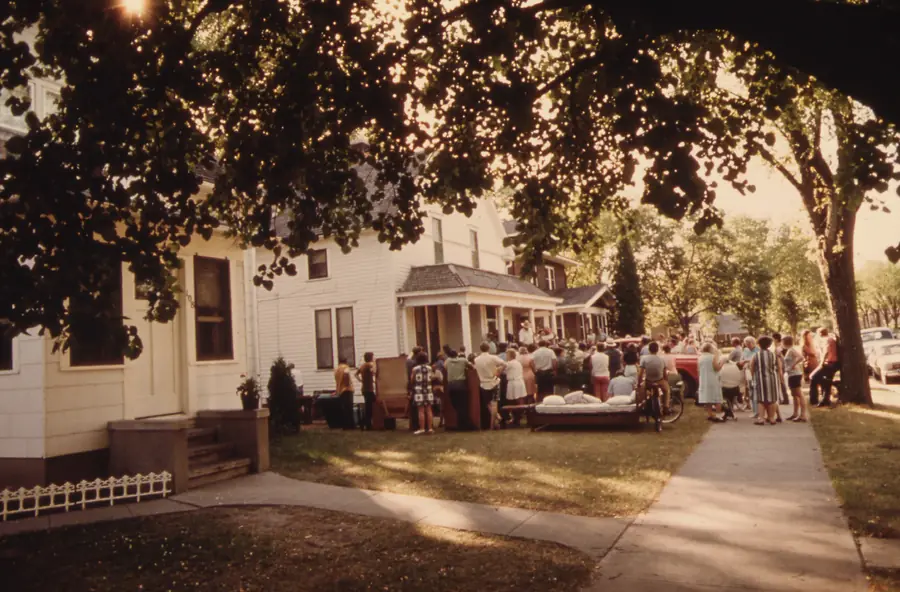
An estate sale empties a home in place. Nearly everything left in it is priced and sold to the public, room by room, most often over two or three days, by a company working for a share or by the family.
To shop one, walk in. Take a card, some cash, something to wrap glass in and a friend who can lift. The first morning has the crowd and the full price, the last day has the markdowns, and what you buy leaves by the company’s deadline.
Just been handed the keys? Lock up tonight, photograph each room, throw nothing away, and sign nothing until somebody has the legal right to sell. The rest of that list is at the end. From the first call to the check is about five weeks by our arithmetic; companies’ own figures stack up to anything from 16 days to 72. If the key comes back with the check, the company holds both the key and the money for about the last nine days.
Counts of companies come from our census of 620 companies’ own websites, read November 24, 2026, and in part again on November 25. The pages linked here were read on those days. We don’t know what the other companies do.
To understand the business, ignore the furniture and watch the front-door key. Whoever has it decides who comes in.
Follow the key: six hooks in about five weeks, by our arithmetic

The family’s side
The company’s side

 25
Both on the company’s side: about 9 days
Does an estate sale mean someone died?
No. Owners who are alive and moving hold them too.
Minnesota’s bond statute counts goods “owned by one or more individuals or families, or by the estate of a deceased individual,” so a couple who sell everything and move to a condo are holding one. Santa Ana, California, draws it tighter: the resident has died or must move to a care facility, and the home will be vacated or sold.
The trade calls the couple’s kind a living estate. Bradley Toombs’s company, Acorn Estate Liquidators in Virginia, says that is what today’s sales are, “more often than not.” “Please don’t ask about the family,” say The Mint Green Tag Sale Company’s rules. The house belonged to somebody, who may well be alive and in Arizona.
What is an estate sale company, and who holds the key?
It is someone paid to run the whole sale, and while it works it holds the key.
Minnesota’s law lists the jobs: “advice, advertising, pricing, display of merchandise, selling, receiving and accounting for payments, and record-keeping.” Little of that can be done from the driveway.
So it starts with the key. New Life Estate Sales keeps it “in a lockbox.” Jamie’s Attic sends “a key release along with your contract” and gives the key back with the check. Ask for the same, signed.
Once the key is handed over you can no longer borrow from the house: Lyn Huck Estate Services claims “the right to charge full commission on the items that have left the home.” And from the first customer on, your money is in the company’s hands before it is in yours. “Your money is never commingled with our business account,” says Capitol Auction & Estate Services; look for that sentence in your contract (who to trust, and what it costs).
Minnesota’s seven jobs do not fall evenly. The public sees two, in the shortest stretch of all.
One turn of the key: four stages, seven jobs

The call the bolt is out to day 13
- Advice One company leaves the contract and asks the family to take “at least a day or two” to read it.
One of the seven jobs, and thirteen days of waiting for the crew.
Setup the bolt is out to day 25
- Pricing One company pays the outside appraiser itself when it needs one.
- Display of merchandise One company’s verbs: “unearth, sort, clean, photograph, research, stage and price.”
- Advertising Street signs, 20 to 30 a sale at one company; Watauga, Texas, allows five.
Three of the seven, in twelve days nobody outside sees.
The sale the bolt is out to day 27
- Selling One company has 8 to 10 people or more in the house. 39 companies mention security: locked cases at 12, cameras at 11, guards or police at 10.
- Receiving and accounting for payments Cash or a card, and at one company cash will “SAVE 5%.”
Two of the seven, in the two or three days the public sees. The last of them is a Sunday more often than a Saturday.
The check the bolt is out to day 34
- Record-keeping One company promises to “record all sales in an itemized sales ledger.”
One of the seven, and the one the check is worked out from.
How long does an estate sale take?
The doors are open two or three days out of about five weeks.
- Call about three and a half weeks before you want the doors open. Only 17 companies say, not all of them counting from the same day; half want more notice, half less.
- The setup takes 12 days or more at half of the 57 companies that say, and some of those count the sale in.
- The check comes within a week of the last day at half of the 100 that say. About half of them count business days, which turns “10 days” into two weeks.
In a row those make 34 days, which is our arithmetic on three separate groups of companies, so treat it as a shape; this calendar takes your own date. Companies agree about how long the doors stay open, and hardly at all about the weeks on either side.
The days themselves we counted on 666 dated sales of two to five days: 387 opened on a Friday, most ran two or three days, and 370 ended on a Sunday against 244 on a Saturday (the count).
The doors are open for three days of about five weeks
- How far ahead to call, before the doors open: 17 companies, from 14 to 49 days, the middle 24.5.
- How long they need to set up, before the doors open: 57 companies, from 2 to 31.5 days, the middle 12.
- How long to the family’s check, after the last day: 100 companies, from 1 to 20 days, the middle 7.
- How long the doors are open: 2-3 days, 28 companies.
- How long the doors are open: 2 days, 17 companies.
- How long the doors are open: 3 days, 15 companies.
- How long the doors are open: 1-3 days, 14 companies.
- How long the doors are open: 2-4 days, 7 companies.
- How long the doors are open: 3-4 days, 6 companies.
- How long the doors are open: 1-4 days, 5 companies.
- How long the doors are open: 1-2 days, 3 companies.
Stack the quickest stated figures and the check comes on day 16; stack the slowest and it is day 72. Our arithmetic.
A family that cannot wait, says Lyn Huck Estate Services, “can expect to pay a much higher commission.”
Eight keys, and what each one opens

About five weeks
The companyThe company 620 say they run sales
- 596 in person, 23 online only, 1 not said
- 46 states
- 201 say insured, 118 bonded, 118 licensed
- That part of the guide
The calendarThe calendar 16 to 72 days, by the companies’ own quickest and slowest figures
- 18 of 57: two weeks to set up
- 12 of 57: five days or less
- 95 of 100: the check inside two weeks
- That part of the guide
The doorThe door 9:00 the usual morning opening at 50 of 103 companies
- 74 state how you get in
- 26 hand out numbers of their own
- 15 limit how many are inside
- That part of the guide
The floorThe floor 11 of 23 hold nothing unpaid
- 8 keep a hold table
- 10 set a rule for children
- 21 say accidents are at your own risk
- That part of the guide
The checkoutThe checkout 9 of 138 add a card fee
- 1.75% to 4%, five at exactly 3%
- 30 say they take checks
- That part of the guide
The familyThe family 23 say stay away, or near it
- 27 say what to do about personal papers
- 5 say what they will not sell
- That part of the guide
What is leftWhat is left 174 of 287 haul or clear it out
- 25 consign it
- 19 buy it out
- 17 let the family keep it
- 6 try a second sale
- That part of the guide
The cityThe city 1 estate sale a year in Bloomfield Hills, Michigan
- No garage sales there at all
- Castle Hills, Texas: two sale days and a pickup day
- Town and Country, Missouri: no auctioneers
- That part of the guide
How do estate sales work for buyers?
You get in by turn, read the tag, pay at checkout and carry it out yourself.
Nine is the commonest morning opening, then ten, then eight (103 companies’ pages); a first day now and then starts after lunch. Numbers decide who goes in first, and prices come down by the day, most often nothing off the first and half off the last. Turn the thing over before you pay; the mark underneath can date it.
For anything you can’t carry, ask at the door how to claim it, because houses disagree. Red Roof Sales wants you to take the tag off and “put on a sticker with your name.” Others keep a hold table.
Then come the rules people learn by breaking them:
- Leave the backpack in the car. The few companies with a bag rule mostly name backpacks.
- Expect no restroom. Of the few that mention one, nearly all say it isn’t for you.
- Plug the lamp in. Nearly all that mention returns say final, no returns or as is.
- Bring your own help. I Heart Estate Sales says “BYO muscle.”
- Pick up on time. At Treasured Estates a purchase still there at 2:00 p.m. on the last day “will be forfeited.”
Do estate sales take cards, and do you pay tax?
Cards, nearly always, where a company says; tax depends on the state and on who sells.
Of the 138 companies that say how to pay in person, 121 take cards, and a few add a fee, most often 3%. Mind the minimum, $10 at one company and $100 at another, so a card alone may not buy you a colander. Brown Button, an online auction, takes nothing but cards, “and no, we can’t take a wheelbarrow of nickels.”
In some states the same dresser goes untaxed when the family sells it and taxed when somebody sells it for them (read November 24, 2026):
- New York: a sale made through a third party, or held to liquidate an estate, is taxed. The third party collects.
- Washington: an agent selling other people’s things collects on every retail sale, even one the owner could make without it.
- Nebraska: household goods sold by an estate sale company are taxable. A tag sale, where the helper mainly appraises, tags and takes the money, can be exempt.
- Florida: a household’s first two garage sales in 12 months can be exempt. A sale through an auctioneer, agent or broker is not.
- Texas: someone selling things bought for personal or family use can be exempt if the year’s receipts do not exceed $3,000 and no auctioneer, broker or factor is hired, online auctions aside.
In any other state, ask first. Buying to resell, ask twice: in California JD Estate Sales asks for “a valid resale certificate,” and Golden Bear says “Resale permits are not accepted at sales.”
How do estate sales work for sellers?
You take out what you are keeping, sign, hand over the key and stay away.
The company sells the rest and pays you what is left after its share. The middle one of 53 posted rates is 37.5%.
Somebody has to have the right to sign. In New York a named executor “has no power to dispose of any part of the estate” until the court issues letters, beyond reasonable funeral expenses and preserving what is there. In Minnesota a representative’s powers begin on appointment and reach back to earlier acts that helped the estate. Once appointed, a Florida representative may sell belongings at a public or private sale without a court order, unless the will or a court says otherwise. If the owner is living the owner signs, or whoever the law lets sign for them. Other states differ, and this is not legal advice.
Then do less than you want to. Ninety-five companies say to throw nothing away before they have seen it. Donna Dumas, who founded Team Louie in Oakland County, Michigan, recalls an early client who could only see a relative’s things as “‘old’ and out-of-style,” and the sale was one of her most successful.
Take out papers, photographs and medicines (what cannot be sold is its own list, cash in a coat lining its own problem). Leave the water, gas and electric on. And go: Texas Treasure Estate Sales answers its own question, “Should I stay or go?” in two capital letters.
Ask what “itemized” means. Gold Standard Estate Sales lists what sold above $25 and Absolute Advantage items at $35 or more, and below that line a whole kitchen can be one number.
What is an estate sale vs garage sale, tag sale or auction?
A tag sets the price at an estate sale or tag sale, and a bid sets it at an auction.
Estate sale and tag sale are two names “often used interchangeably,” though Nebraska’s tax office tells them apart. A garage sale stops at the garage and driveway. Cities treat the two differently: Castle Hills, Texas, gives the $15 garage-sale permit to the resident and the $25 estate-sale permit to the company, which must show a state sales tax permit.
Six kinds of sale, side by side
What happens to items not sold at an estate sale?
The contract decides, and nearly every company that says anything names donation, hauling or both.
Certified Estate Sales puts the charity truck on “the Tuesday or Wednesday following the sale,” which leaves a day to walk through.
Settle first whether the commission buys you an empty house. Lott’s Treasures calls removal of what is left “not an included service.” Where it is included, get the day in writing, and a price for missing it.
Do you need a permit for an estate sale, and what about the neighbors?
It depends on the city.
Dallas wants a permit, and the contract on the company’s letterhead. Mission Hills, Kansas, allows two consecutive days, once in twelve months, and never a Saturday, a Sunday or a legal holiday. Elsewhere there may be nothing to get: “Most cities don’t require a permit,” says one Michigan company, Team Louie, which will “obtain the permit and pay the fee” where one does. some companies get the permit for you; have yours say so in writing.
Next door, expect a line before opening and cars on both sides for two or three mornings. What you can hold the sale to is mostly signs and curb. Watauga, Texas, wants the company’s name, logo and phone number on every sign, none homemade. Santa Ana keeps everything for sale out of public view and bans signs on poles, streetlights and city trees. Call the number on the sign first, then code enforcement.
What to expect at an estate sale, and what should you do first?
Expect a line, a tag on nearly everything, a table by the door where you pay, and no returns. What to do first depends on which day of the five weeks you are standing in, and on which side of the door.
Which day are you standing in?

The deeper the cut, the more the company holds that day: nothing, the key, then the key and the money.
Day 13: Sunday, January 17, 2027 The crew has the house. Give them a list of anything of yours still inside. At one company, family things and papers that turn up are “put into a box and given to the Family”; ask for that box. The company holds the key.
If day 0 is Monday, January 4, 2027: the crew about Sunday, January 17, doors open about Friday, January 29, doors shut about Sunday, January 31, the check about Sunday, February 7. The dates shown first are an example.
Going this weekend. Tonight, see whose pages name a date, and read the listing (our reader marks up any you paste) for the door time, how you get in, how to pay and the pickup deadline. In the morning, set out for the number rather than the door. Miss the first wave and the last day is still yours. If the sofa will not fit your car, find the truck before you pay.
You have the keys. Tonight, lock up, write down everyone else who has a key and photograph each room. Tomorrow, find out who can legally sign, and call three companies (by ZIP). Before the key leaves your hand, have seven answers in writing:
- who holds it, from when until when
- whether you may go in
- which account the money sits in
- what gets itemized
- who empties the house, and by what day
- who gets the permit
- the check day, in calendar days
If nobody will take the job because it is too small or behind a gate, ask about an off-site or online sale, or ask your city which sale rule covers holding it yourself.
Living next door. Before the first open day, get the company’s name and number from the crew, and move your own car the night before.
Questions people ask
Can anyone go to an estate sale?
Yes, unless it is by appointment. The Estate Sale House says most of its sales “do not require an appointment”; Burns Estate Liquidator sells by appointment at homes behind gates.
Which is better for a family, an estate sale or an auction?
It depends what is in the house. Epic Auctions and Estate Sales, which runs both, says coins, jewelry, guns and art “may perform best” at auction. A tag caps what a thing can bring; a bid does not.
What is an estate sale in real estate?
The house itself, sold by the estate. In Texas, expect less paper: the seller’s disclosure notice does not apply when a fiduciary sells for a decedent’s estate, so the inspection has to do the talking.
What does a living estate sale mean for the person living there?
At some companies, moving out first. Burns wants “no one living in the house”; Everything Goes, in Gainesville, Florida, tells the owner, “Yes you must vacate the home.”
Does the family pay income tax on estate sale money?
On a gain, meaning what a thing brings above its cost basis. The proceeds also count toward whether you must file, the IRS says. This is not tax advice.
How this guide was made
Researched and drafted with AI help from the sources linked above, and checked against them by a second AI reader (how we check). Corrections: our corrections page.
- Written by
- Estate Sales Near Me staff (who we are)
- Sources last read
- (how we check)
- Linked in the text
- 66 pages on 61 websites
All 61, by address
revisor.mn.gov, town-and-country.org, sanangeloestatesales.com, iheartestatesales.com, secondchancesestatesales.com, myyellowbird.com, elliottsestatesales.com, jamesbeanestatesales.com, cityofcastlehills.com, dianesestatesales.com, francisfindings.com, santa-ana.gov, acornestateliquidators.com, themintgreentagsalecompany.com, newlifeestatesales.com, jamiesattic.com, lynhuck.com, capitolauction.net, estateliquidatorsdallas.com, aaronsestatesales.com, cowtx.org, kathysestatesales.com, andersonestateliquidators.com, bloomfieldhills.gov, sites.google.com, treasuredestates.com, absoluteadvantage.net, lynnsestatesales.com, brownbutton.com, tax.ny.gov, apps.leg.wa.gov, revenue.nebraska.gov, flrules.org, statutes.capitol.texas.gov, jdestatesales.com, goldenbearestateliquidation.com, nysenate.gov, flsenate.gov, teamlouie.com, bulldogestatesales.com, texastreasureestatesales.com, goldstandardestatesales.com, catalog.archives.gov, allamericantagsales.com, bassettsestatesales.com, estatesalesgainesville.com, burlesontx.com, law.cornell.edu, estatesalesofdelaware.com, bryantestatesales.com, auctions.kansasestatesales.com, certifiedestatesales.com, lottstreasures.com, dallascityhall.com, missionhillsks.gov, afullhouseestateliquidators.com, bennettandsudderth.com, theestatesalehouse.com, burnsestateliquidator.com, epicauctionsandestatesales.com, irs.gov - Published
- This site
- Independent: sells nothing, and is paid by none of the companies it names or links to.
- Found a mistake?
- Corrections · Editorial policy


